|
The Romans did not intend to create an empire, but they responded to threats from their neighbors. By 275 BC , the Romans were beginning to expand and conquer other parts of the Mediterranean. They first fought on the Italian peninsula, then Carthage, then Macedonia in the east, and so on. As each adversary was defeated, the Romans found themselves drawn-in to keep the peace among the conquered people.
The Romans did not develop their own style of art as much as they adapted and blended the art of the nations around them. The primary influence was Grecian which is in part due to Rome being under Greek rule for years. The Greek culture was more sophisticated than that of the Romans. Their learning and philosophy were more advanced, and Roman culture was overwhelmed as the Greek culture was absorbed. The Roman art also incorporated the styles of the Etruscan, native Italic, and Egyptians. They conquered other nations and made them part of the Roman empire, both in geography and in art.
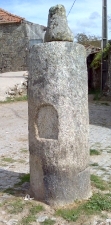
By the time Jesus began His ministry, Rome had literally paved the road for the spread of Christianity. In order for Rome to conquer the world, it created a network of roads and bridges. This allowed for armies to travel quickly and to provide faster communication between provinces. Engineering constituted a large portion of Rome's technological superiority and legacy, and also contributed to the construction of hundreds of aqueducts, baths, theaters, and arenas.
If someone forces you to go one mile, go with him two miles. - Matthew 5:41
The native language of the Romans was Latin, however, Greek came to be the language spoken by the well-educated elite, as most of the literature studied by Romans was written in Greek. This was also advantageous for the spread of the gospel.
 19Pilate had a notice prepared and fastened to the cross. It read: JESUS OF NAZARETH, THE KING OF THE JEWS. 20Many of the Jews read this sign, for the place where Jesus was crucified was near the city, and the sign was written in Aramaic, Latin and Greek. - John 19:19-20
|