|
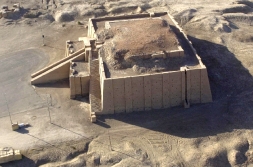
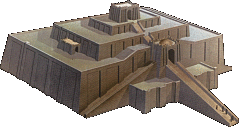
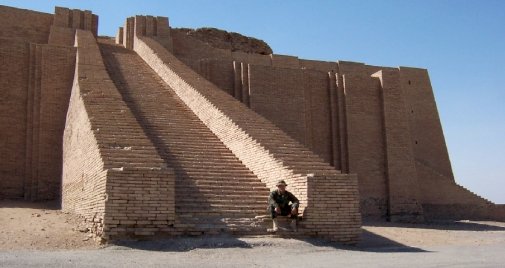
Abraham, the father of the Hebrews came from Ur, which is currently in southern Iraq. During his time there, existed the temple to the moon god, Nanna. In the image below, you can see the remaining part of the second tier.
27Terah became the father of Abram, Nahor and Haran. And Haran became the father of Lot. 28While his father Terah was still alive, Haran died in Ur of the Chaldeans, in the land of his birth. 29Abram and Nahor both married. The name of Abram's wife was Sarai, and the name of Nahor's wife was Milcah; she was the daughter of Haran, the father of both Milcah and Iscah. 30Now Sarai was barren; she had no children.
31Terah took his son Abram, his grandson Lot son of Haran, and his daughter-in-law Sarai, the wife of his son Abram, and together they set out from Ur of the Chaldeans to go to Canaan. But when they came to Haran, they settled there. - Genesis 11:27-31
While reading about the journeys of Abraham and how he moved around in tents, we get into the mindset that everyone was nomadic. By studying the art of his origin and time, we realize he was not as primitive as we may have imagined.
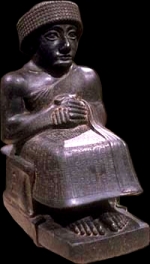
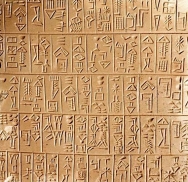 This is the seated Gudea as Ensi (governor) of Lagash. The cuneiform inscriptions on his garment identify him as builder (or refurbisher) of temples.
Cuneiforms were originally inscribed with a pictographic ("picture writing") language, but during this time period changed to pictographic ("concept writing"). It is possible Abraham and his family used this form of writing to record their history and document earlier history as a supplement to storytelling.
|